Strength past 28 days
The reaction keeps consuming free lime and building C-S-H, so strength climbs well beyond the standard test age.
Fly ash is the fine grey residue captured from coal-fired power stations. At the micron scale it behaves as a pozzolan — reacting with cement to build the very same binder that gives concrete its strength.
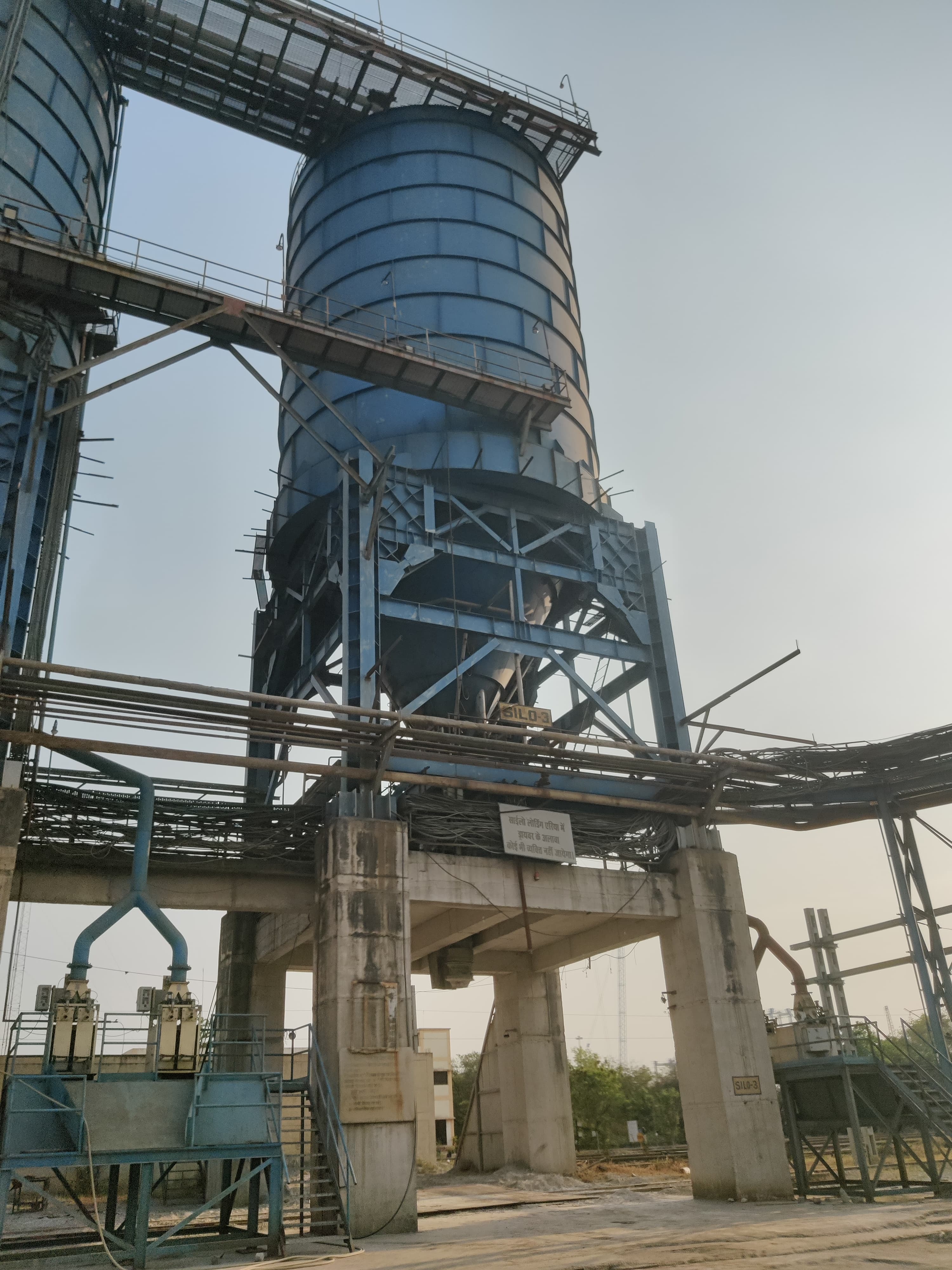
Fly ash is the fine residue carried up with flue gases when pulverised coal burns in thermal power stations — captured by electrostatic precipitators before it can leave the stack.
At the micron scale its particles are spherical and glassy, so it behaves as a pozzolan: with cement and water it reacts to form the very same binding compounds as cement itself. Used as a partial replacement it raises long-term strength, cuts permeability, lowers the heat of hydration in mass pours, and trims both cost and embodied carbon from every cubic metre placed.
We supply dry-collected fly ash, classified for consistent fineness, with a test certificate against each lot.
The reaction keeps consuming free lime and building C-S-H, so strength climbs well beyond the standard test age.
Spheres pack the voids between cement grains, cutting the capillary paths that carry water, chloride and sulphate.
Replacing clinker slows early heat, controlling thermal cracking in rafts, dams and other mass pours.
Two grades — a workhorse Grade I and an ultra-fine Microfine — each classified to spec and lot-tested before dispatch.